Author: Carla

  • The Formaet® Clip System: protecting the canvas, redefining how it is held

    The Formaet® Clip System: protecting the canvas, redefining how it is held

    The Formaet® Clip System: protecting the canvas, redefining how it is held

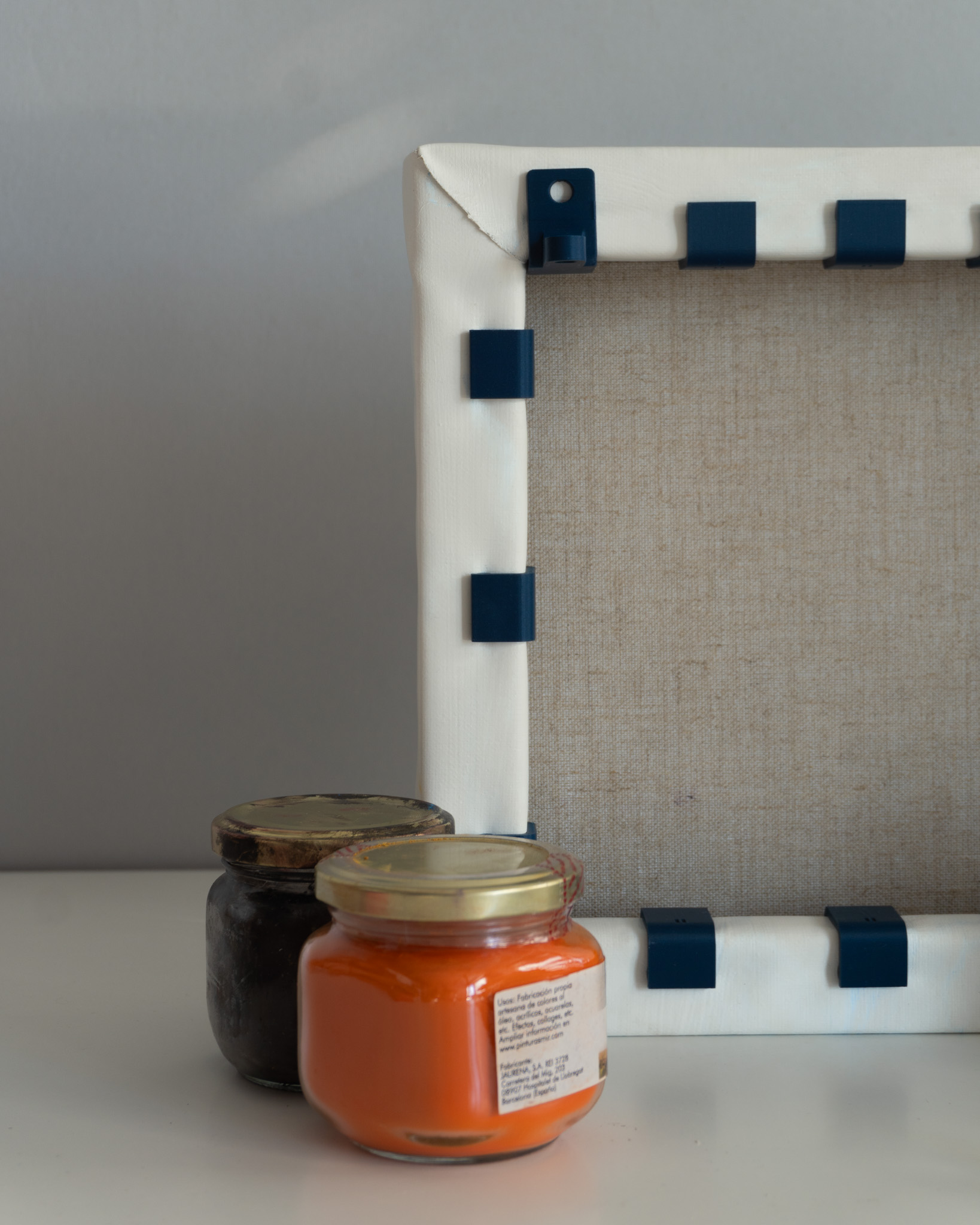
    At the core of the Formaet® Stretcher Canvas Frame lies one of its most important patented innovations: the clip system, designed to replace traditional staples and fundamentally improve how canvas is stretched, secured, and preserved.

    For centuries, artists have used metal staples or nails to fix canvas onto wooden stretcher frames. While effective, this method has a clear drawback: it pierces the canvas and permanently damages both the fabric and, over time, the frame itself. This limits reuse, reduces material integrity, and contributes to unnecessary waste.

    Formaet® was designed to change this.

    A system built to protect, not damage

    The Formaet® Clip System introduces a new approach: securing the canvas without puncturing it and without damaging the frame. Instead of forceful stapling, the system uses precision-engineered clips that hold the canvas through controlled pressure and structural grip.

    The result is twofold:

    • The canvas remains intact, without holes or structural damage
    • The stretcher frame remains reusable indefinitely, without degradation

    This transforms the stretcher frame from a disposable structure into a long-term modular system.

    Four clips, designed for different materials

    The system is composed of four types of Clips, each adapted to specific canvas materials and weights:

    • Clip 1 is designed for raw linen and transparent primed linen, ensuring a precise and gentle grip for delicate and thin surfaces.
    • Clip 2 works with primed cotton and primed linen, balancing tension and stability for pre-treated and thicker canvases.
    • Clip 3 and Clip 4 are designed for heavier, high-grammage fabrics, providing stronger structural support.

    Each clip integrates seamlessly into the Formaet® frame, distributing tension evenly across the canvas while maintaining material integrity.

    Hook Clips: extending the system to display

    In addition to the Clips, Formaet® introduces Hook Clips, designed for hanging artworks directly on the wall. They extend the same modular logic from creation to exhibition, allowing the system to function across the full lifecycle of the artwork.

    A circular approach to artistic infrastructure

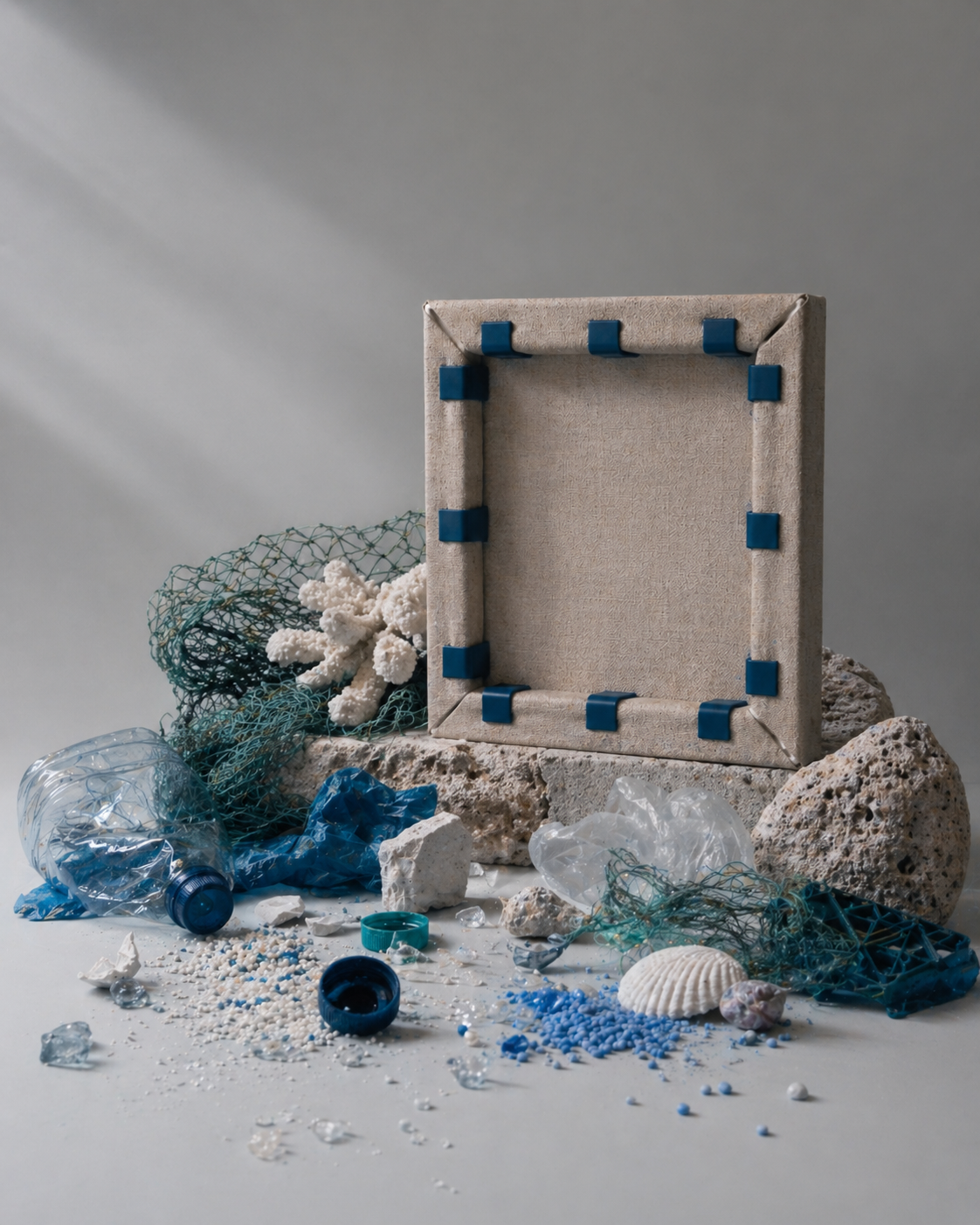
    All Formaet® clips are made from ocean-bound recycled plastic, reinforcing a circular production model where material recovery and design innovation work together.

    By eliminating canvas puncturing and preventing structural damage to both canvas and frame, the Formaet® Clip System enables true reusability. The stretcher frame becomes not a consumable object, but a long-lasting, adaptable structure.

    Formaet® is not just improving how canvases are stretched. It is redefining what a canvas frame can be: protective, reusable, and designed for continuity.

  • From ocean waste to creative structure: how Formaet® Stretcher Canvas Frames are made

    From ocean waste to creative structure: how Formaet® Stretcher Canvas Frames are made

    From ocean waste to creative structure: how Formaet® Stretcher Canvas Frames are made

    At Formaet®, sustainability is not a concept added at the end of the design process. It is the starting point of everything we build.

    Our Stretcher Canvas Frame is made from 100% ocean-bound recycled plastics, transforming waste that threatens marine ecosystems into a new material designed for creative production.

    The process begins far from the studio, in coastal and marine environments where plastic pollution accumulates and endangers ocean life. Specialized recovery teams—often working alongside fishing communities—collect this plastic directly from the sea or from areas at high risk of entering the ocean.

    Once recovered, the plastic is carefully sorted, cleaned, and treated through a recycling process that transforms it into high-quality, usable raw material. This material is then processed into recycled plastic suitable for industrial applications, giving it a second life far removed from its original environmental impact.

    From this regenerated material, Formaet® develops its patented modular Stretcher Canvas Frame system.

    Rather than relying on traditional virgin materials, we work with ocean-bound recycled plastics to create a structural system that is both durable and adaptable. The result is a new generation of canvas frame infrastructure designed not only for performance, but for circularity.

    Each frame becomes part of a larger ecosystem: one that connects environmental recovery, material innovation, and artistic creation.

    By integrating ocean plastic into our product system, we aim to contribute to a model where waste is no longer the end of a lifecycle, but the beginning of a new one.

    Formaet® is built on this principle: transforming environmental responsibility into functional design, and redefining how creative tools are conceived, manufactured, and used.

    This is not just about materials. It is about changing the system behind the tools artists use every day.

  • Why haven’t art tools evolved in decades?

    Why haven’t art tools evolved in decades?

    Why haven’t art tools evolved in decades?

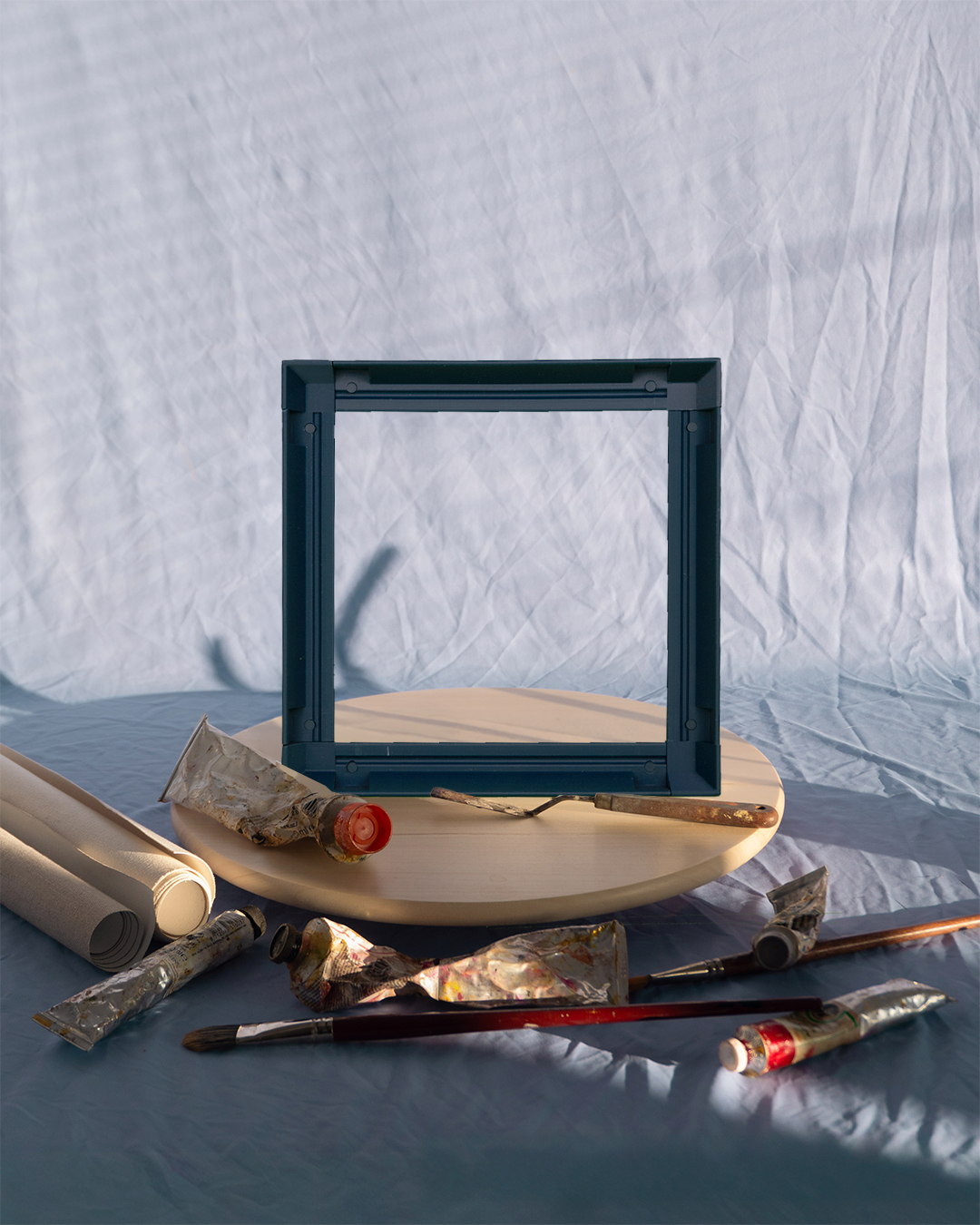
    The stretcher canvas frame—arguably one of the most essential tools in painting—has remained fundamentally unchanged for centuries.

    Since the early development of oil painting on canvas in the 15th century, artists have relied on a wooden stretcher frame to tension and support the canvas surface. Over time, the system was refined in terms of joinery, tensioning keys, and standard sizing, but the core principle has stayed exactly the same: a fixed wooden structure that holds fabric under tension.

    Today, whether in traditional studios or contemporary art practices, the same logic still applies. A rectangular wooden frame, cross bracing for stability, and mechanical tensioning through wedges or keys. Materials may vary slightly—pine, hardwoods, engineered wood—but the system itself has barely evolved in its essence.

    This raises an important question: why has one of the most fundamental tools in art remained almost untouched since the 15th century?

    At Formaet®, we started from this question.

    We are building the first meaningful evolution of the stretcher canvas system in centuries: a patented modular system designed specifically for artists’ real creative workflows. Not an iteration of the old model, but a complete rethinking of how canvas structures can adapt, expand, and evolve over time.

    Our system replaces rigidity with modularity. Fixed dimensions with scalability. Waste with circular design.

    Made from ocean-bound recycled plastic, Formaet® is designed to respond to the needs of contemporary artists: flexibility, sustainability, and creative freedom without constraints.

    This is not just a product innovation. It is a shift in how we understand the infrastructure of art itself.

  • Formaet® Selected for the Premi Impulsa Cultura 2026 by Fundació Catalunya Cultura

    Formaet® Selected for the Premi Impulsa Cultura 2026 by Fundació Catalunya Cultura

    Formaet® Selected for the Premi Impulsa Cultura 2026 by Fundació Catalunya Cultura

    Recognizing innovative cultural projects driving sustainability, creativity, and impact in Catalonia’s creative industries.

    We are proud to announce that Formaet® has been selected for the Programa IMPULSA CULTURA 2026 by Fundació Catalunya Cultura and is a finalist for the Premi IMPULSA CULTURA.

    This recognition is especially meaningful for us, as it comes from one of the most relevant initiatives supporting cultural and creative innovation in Catalonia. The Impulsa Cultura program identifies and accompanies projects that are not only artistically relevant, but also have the potential to generate real impact through innovation, sustainability, and long-term vision.

    Being part of this program means entering a space where culture, entrepreneurship, and social impact meet. It is a platform that connects emerging projects with mentors, experts, and institutions that are actively shaping the future of the cultural and creative industries.

    For Formaet®, this milestone represents another step forward in a journey that began with a simple but ambitious question: how can we rethink one of the most traditional tools in art and turn it into something more adaptable, sustainable, and aligned with the needs of contemporary creators?

    From that question, we developed Formaet®—a patented modular stretcher frame system made from ocean-bound recycled plastic. A system designed to replace rigidity with flexibility, linear production with circular design, and fixed structures with expandable creative possibilities.

    Our goal is not only to innovate in materials or design, but to rethink the infrastructure behind artistic creation itself. To build tools that respond to how artists actually work today, while reducing environmental impact and opening new possibilities for expression.

    Being selected for Impulsa Cultura is both an acknowledgment of our vision and a reminder of the responsibility we carry: to continue developing solutions that sit at the intersection of art, design, and sustainability.

    We are deeply grateful to Fundació Catalunya Cultura for supporting projects that aim to transform the cultural sector from within, and for believing in the potential of new systems that challenge the status quo.

    This is just the beginning of a much longer journey.

Formaet
Privacy Overview

This website uses cookies so that we can provide you with the best user experience possible. Cookie information is stored in your browser and performs functions such as recognising you when you return to our website and helping our team to understand which sections of the website you find most interesting and useful.